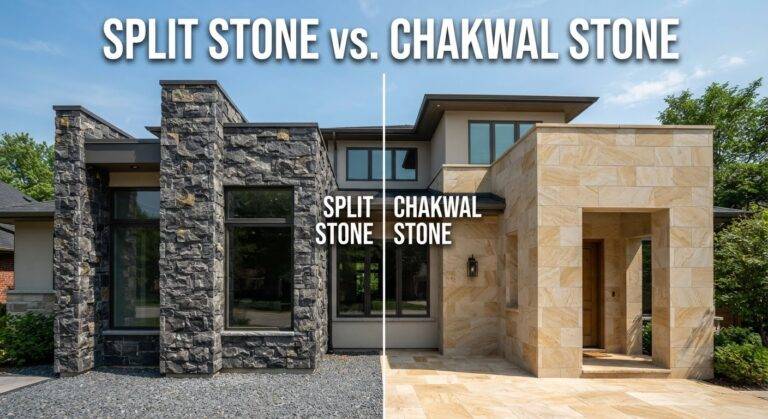
Choosing between split stone vs chakwal stone is one of the most critical decisions when designing a modern house front elevation in Pakistan. Both natural stone materials provide superior thermal insulation and lasting weather protection that far outlasts conventional exterior wall paint.
However, each stone offers a distinct architectural aesthetic, weight profile, and price point. Understanding their differences ensures you select the right cladding for your exterior design and budget.
Texture and Visual Appeal: Split Stone vs Chakwal Stone
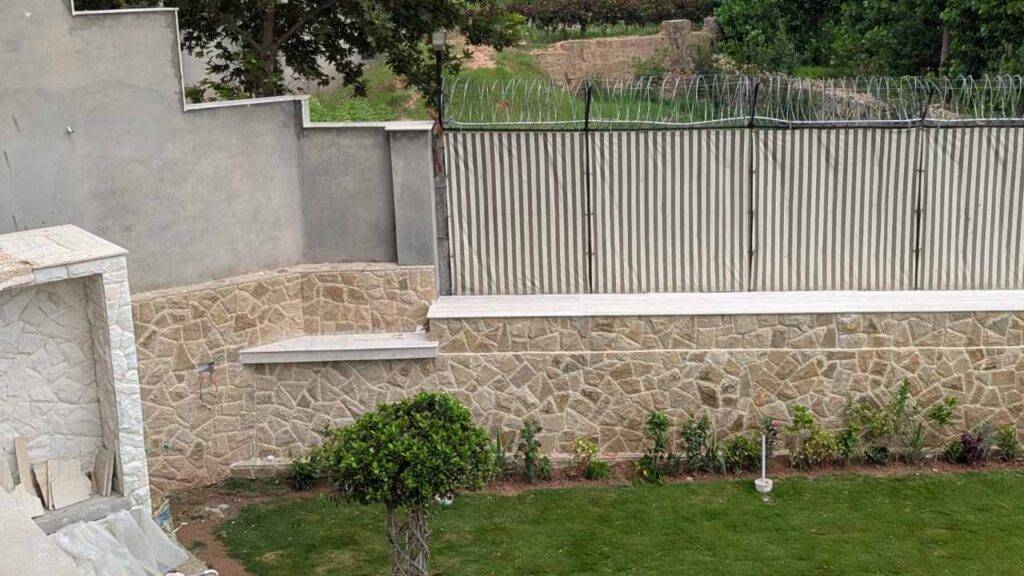
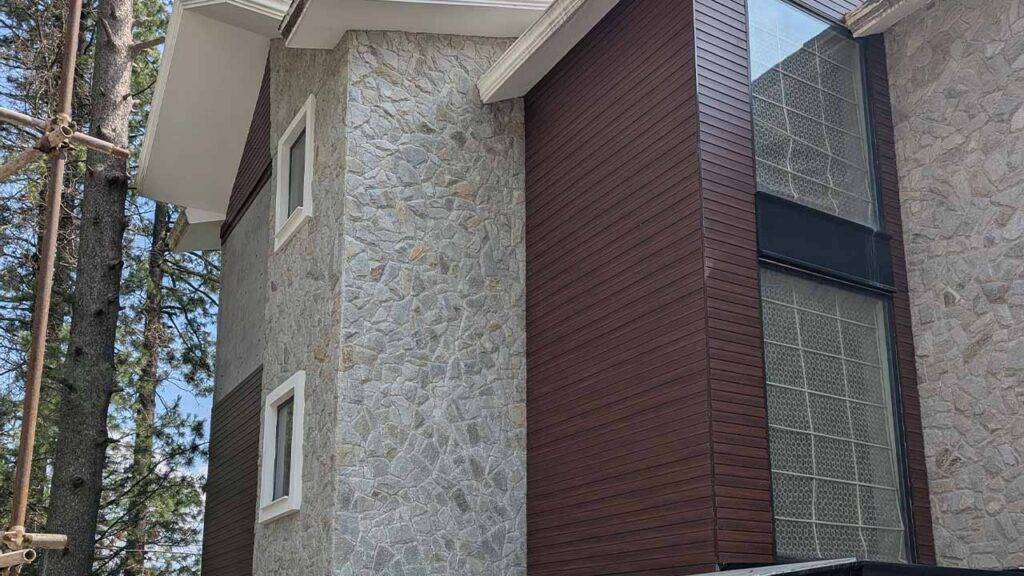
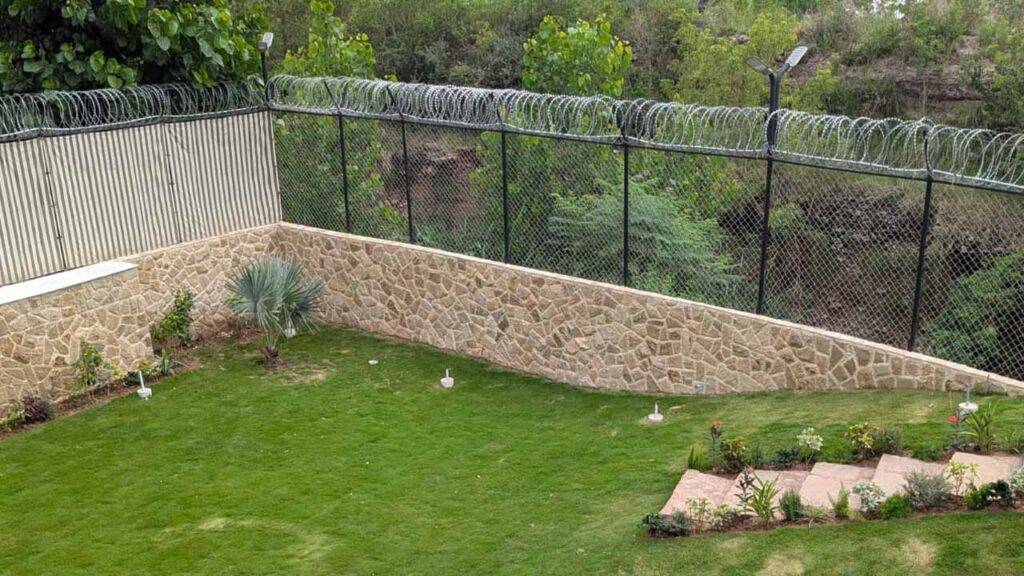
Surface texture establishes the primary visual distinction between these two materials. The Chakwal Stone Collection features authentic sedimentary sandstone extracted from the Salt Range in Punjab. Its natural cleft and hand-chiselled surface deliver warm earthy hues, including mustard yellow, ochre, and rustic beige, making it ideal for classical bungalows and Spanish-style villas.
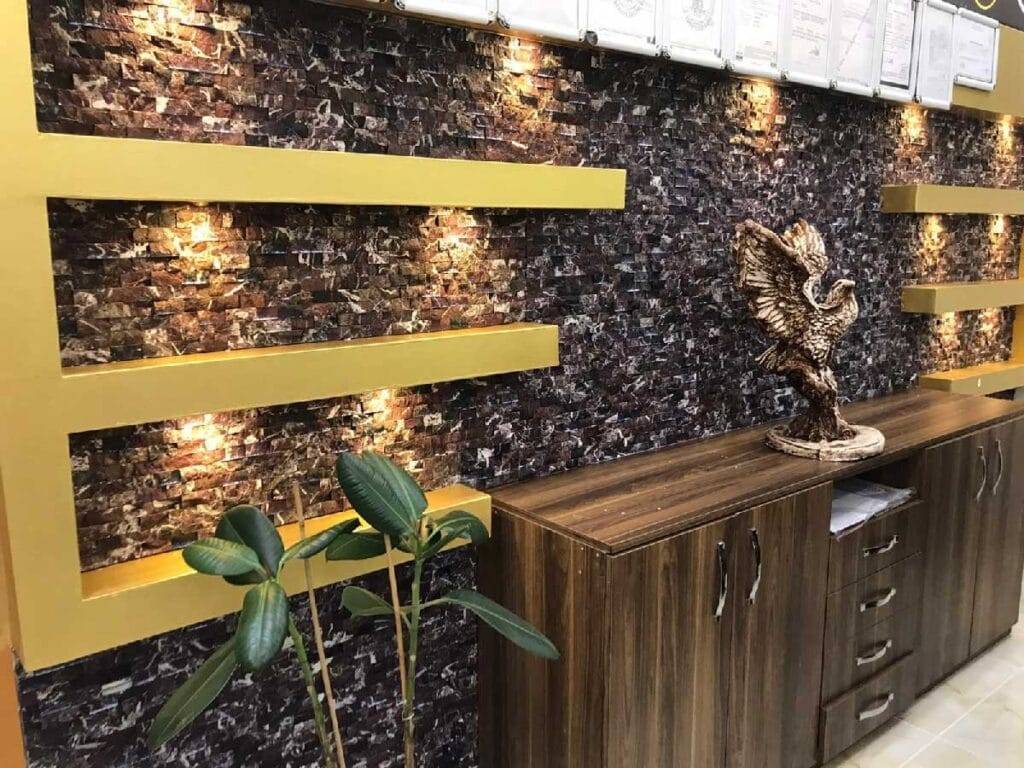
In contrast, Split Stone Varieties showcase an edgy, machine-split 3D rockface profile. The protruding facets create dramatic shadow lines under sunlight, accentuating crisp modern architecture. Available in contemporary charcoal grey, silver, and jet black, split stone perfectly complements minimalist geometric facades.
Durability and Weather Performance: Split Stone vs Chakwal Stone
Both stones perform reliably across Pakistan’s intense climate, from searing summer heat exceeding 45°C to heavy monsoon rains. Chakwal sandstone is naturally porous and breathable, offering exceptional thermal mass that keeps indoor spaces cooler. Applying a silicone-based water-repellent sealant every few years protects it against rainwater stains and efflorescence, ensuring a lifespan exceeding 50 years.
Split stone tiles feature higher density and lower porosity, resisting fungal growth and smog in urban centers like Lahore, Islamabad, and Karachi. Without requiring frequent sealing, split stone maintains its structural beauty and color stability for 30 to 40 years.
Rates and Installation Effort: Split Stone vs Chakwal Stone
Pricing and fixing requirements differ substantially between the two materials. Chakwal stone is quarried locally with minimal processing, making it significantly more economical:
- Chakwal Stone Costs: Raw slabs range between PKR 140 and PKR 200 per sq. ft. Because tiles are 20 mm to 35 mm thick, masons fix them using standard cement-sand mortar at PKR 60 to PKR 90 per sq. ft. labor.
- Split Stone Costs: Machine cutting and sorting elevate split stone prices to PKR 180 to PKR 320 per sq. ft. Its calibrated back requires polymer-modified tile adhesive, with specialized labor costing PKR 80 to PKR 130 per sq. ft.
On average, choosing Chakwal stone saves 25% to 35% on total exterior cladding expenses compared to premium split stone installations.
Plot Size Suitability: Split Stone vs Chakwal Stone (5 Marla, 10 Marla, 1 Kanal)
Facade dimensions should guide your cladding selection:
- 5 Marla Houses (25×45 ft): Slim-profile split stone applied to accent pillars or vertical panels creates sleek height without overwhelming compact frontages.
- 10 Marla Houses (35×65 ft): A hybrid design excels here. Combine warm Chakwal stone on boundary pillars with dark split stone across first-floor cantilever projections.
- 1 Kanal & Larger Estates (50×90 ft+): Expansive elevations benefit from Chakwal stone’s grand, continuous coverage. Review finished designs across Our Portfolio for layout inspiration.
Technical Comparison Table: Split Stone vs Chakwal Stone
| Cladding Feature | Chakwal Stone | Split Stone |
|---|---|---|
| Material Origin | Potohar Salt Range Sandstone | Dense Rockface Stone / Limestone |
| Surface Finish | Hand-chiselled rustic cleft | 3D protruding fractured rockface |
| Tile Thickness | 20 mm to 35 mm | 12 mm to 22 mm |
| Color Palette | Mustard yellow, beige, ochre | Charcoal grey, black, silver, rust |
| Fixing Base | Cement-sand mortar | Polymer-modified tile adhesive |
| Wall Load | Heavy (55–65 kg/m²) | Medium (35–45 kg/m²) |
| Material Rate | PKR 140 – 200 / sq. ft. | PKR 180 – 320 / sq. ft. |
| Labor Rate | PKR 60 – 90 / sq. ft. | PKR 80 – 130 / sq. ft. |
| Average Lifespan | 40 to 50+ years | 25 to 35+ years |
| Ideal Architecture | Classical, Spanish, Farmhouse | Contemporary, Cubical, Minimalist |
Frequently Asked Questions About Split Stone vs Chakwal Stone
Which is more affordable when comparing split stone vs chakwal stone?
Chakwal stone is 25% to 35% cheaper overall due to direct quarry supply and traditional cement-sand mortar installation that avoids expensive adhesives.
Can you combine split stone vs chakwal stone on the same facade?
Yes, pairing earthy Chakwal stone along porch columns with charcoal split stone on upper terrace balconies creates balanced architectural contrast.
Which lasts longer outdoors: split stone vs chakwal stone?
Chakwal stone can last over 50 years when maintained with periodic water-repellent sealers, while split stone reliably lasts 30 to 40 years.
Conclusion: Making the Right Choice Between Split Stone vs Chakwal Stone
Whether you choose split stone or Chakwal stone depends on your aesthetic preference and construction budget. Chakwal stone provides unmatched warmth, durability, and cost savings for traditional and expansive homes, while split stone offers sharp contemporary character for modern builds. For direct quarry supply and expert advice, visit Nafees Chakwal Stone or Contact Us today.
Request a quote contact page.