When designing an exterior facade in Pakistan, selecting Chakwal natural stone ensures unmatched longevity, structural strength, and timeless architectural beauty. While manufactured ceramic tiles have flooded the market, authentic sandstone quarried from the Potohar region remains the undisputed gold standard for luxury homes and commercial elevations.
Sourced directly by Nafees Chakwal Stone, this indigenous sedimentary rock has protected regional structures for generations. Choosing the right exterior wall material directly impacts maintenance expenses, indoor thermal comfort, and long-term property valuation.
Architectural Varieties and Finishes of Chakwal Natural Stone
Homeowners can customize their exterior facade using diverse cuts and surface textures of Chakwal natural stone:
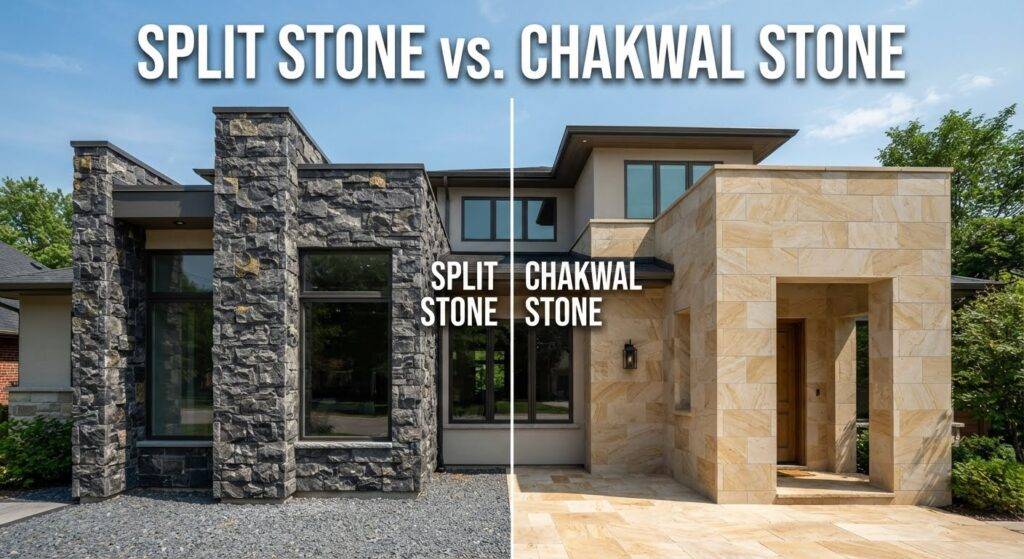
- Ashlar Dressed Blocks: Hand-chiselled or machine-cut blocks featuring square edges and uniform dimensions. Explore classical options in the Chakwal Stone Collection for modern cubic bungalows and grand entrance pillars.
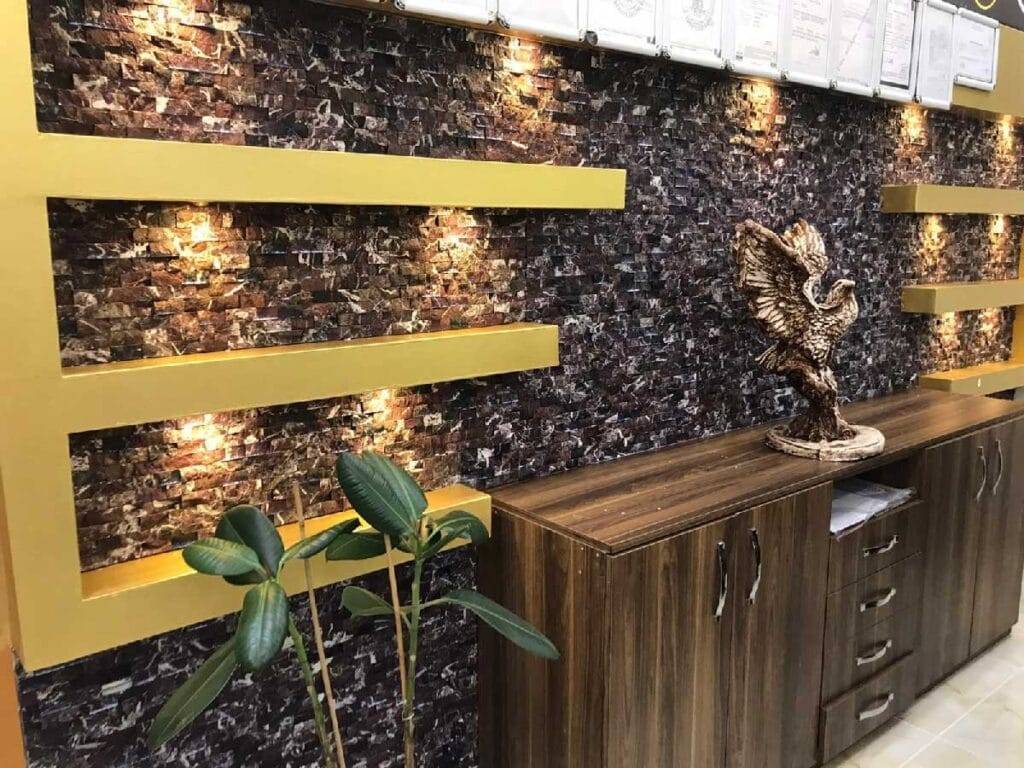
- Split Face Textures: Hydraulic-split slabs that expose a rugged, uneven face with prominent shadow lines. Homeowners often pair these with Split Stone Varieties for striking contemporary elevation contrasts.
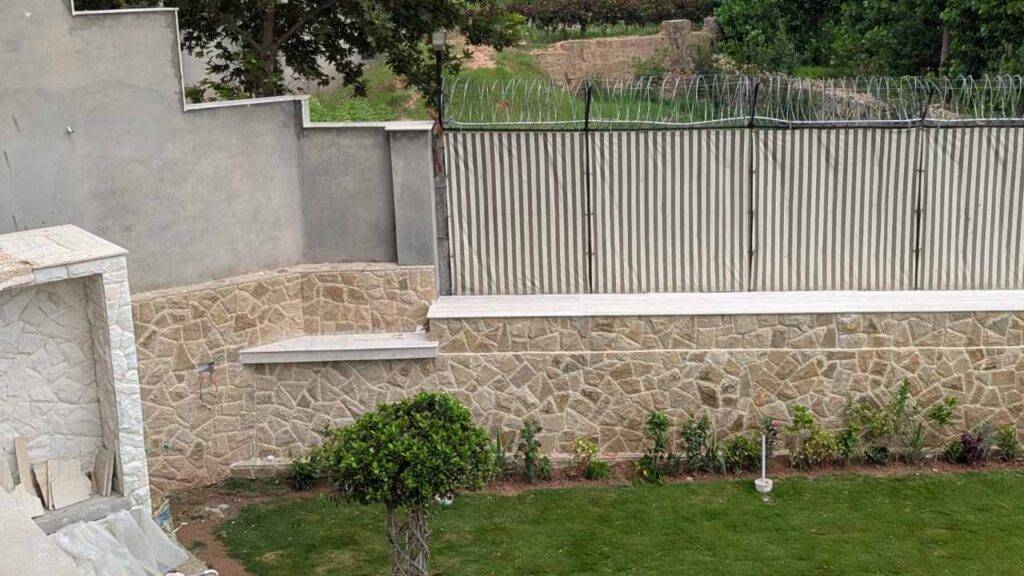
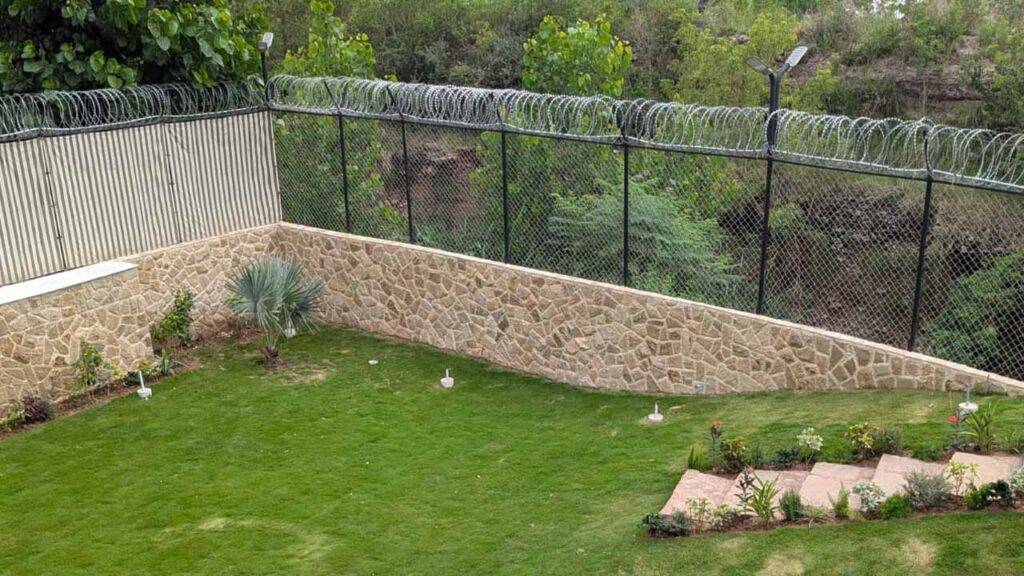
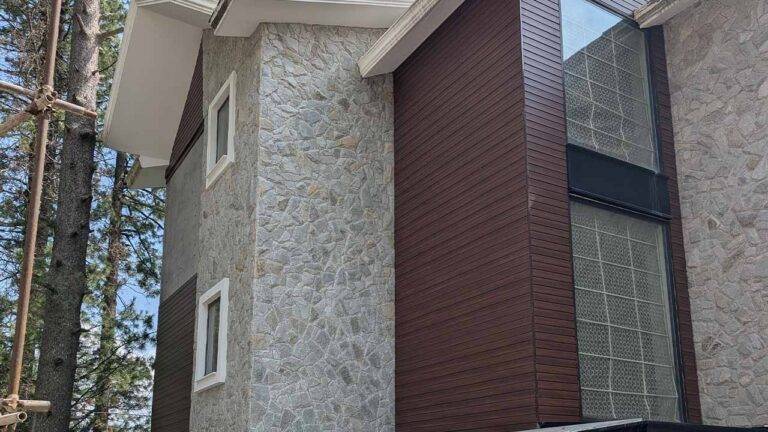
- Random Rubble Stone: Naturally irregular sandstone fragments laid in organic arrangements. This finish delivers an earthy, fortress-like aesthetic ideal for perimeter boundary walls and rustic farmhouses.
- Honed and Calibrated Tiles: Smooth, semi-matte finishes suitable for architectural bands, outdoor water features, and patio borders.
Superior Compressive Strength and Durability of Chakwal Natural Stone
The primary reason Pakistani civil engineers specify Chakwal natural stone over artificial alternatives is raw mechanical strength. Formed under immense tectonic compression within the Salt Range, Chakwal sandstone boasts a compressive strength between 12,000 and 16,500 PSI.
In contrast, standard exterior ceramic tiles only deliver 2,500 to 4,000 PSI compressive resistance. High atmospheric heat, monsoonal downpours, and structural thermal movement cause thin ceramic tiles to crack, chip, and pop off walls within five to ten years.
Because natural sandstone is a monolithic mineral mass, it easily delivers a 50+ year lifespan without surface decay. You can inspect decades-old installations across Islamabad and Lahore in Our Portfolio that still maintain pristine structural integrity.
Energy Efficiency and Thermal Insulation Benefits of Chakwal Natural Stone
During extreme Pakistani summers, exterior cladding functions as the first thermal barrier against intense solar radiation. Chakwal natural stone offers high thermal mass and remarkably low thermal conductivity compared to artificial products.
Dense sandstone absorbs daytime radiant heat slowly, delaying heat transfer into residential living spaces by 8 to 10 hours. Interior rooms remain 3°C to 6°C cooler during peak afternoon hours, lowering air conditioning loads and cutting electricity costs by up to 20%.
During winter months, this thermal mass works in reverse by retaining indoor warmth. Unlike artificial ceramic tiles that trap moisture and reflect ambient heat into the atmosphere, natural sandstone creates a balanced, energy-efficient building envelope.
Chakwal Natural Stone vs Ceramic Elevation Tiles: Technical Comparison Table
Before committing your cladding budget, evaluate how Chakwal natural stone compares technically against synthetic ceramic wall tiles:
| Performance Metric | Chakwal Natural Stone | Ceramic Elevation Tiles |
|---|---|---|
| Material Composition | 100% Natural Quartzitic Sandstone | Machine-pressed baked clay with glaze |
| Expected Lifespan | 50 to 100+ Years | 7 to 10 Years |
| Compressive Strength | 12,000 – 16,500+ PSI | 2,500 – 4,000 PSI |
| UV Sun Resistance | Zero fading (natural earthen pigments) | Glaze fades and discolors in 3–5 years |
| Thermal Insulation | High thermal mass (3–6°C indoor cooling) | Minimal thermal barrier |
| Adhesion Reliability | Monolithic cement-sand mortar bond | Prone to adhesive failure and tile fall |
| Weather Resistance | Resists frost, rain, and scorching heat | Brittle; prone to hairline freeze-thaw cracks |
| Maintenance Need | Occasional water rinse (zero chemicals) | Frequent regrouting and tile replacement |
| Impact on Property Value | Appreciates property curb appeal | Depreciates as tiles age and crack |
Frequently Asked Questions About Chakwal Natural Stone
How long does Chakwal natural stone last compared to ceramic elevation tiles?
Chakwal natural stone reliably lasts 50 to 100+ years without degrading, whereas ceramic tiles rarely exceed 7 to 10 years before cracking, fading, or falling off exterior walls due to thermal shock.
Does Chakwal natural stone provide natural thermal insulation for homes?
Yes, Chakwal natural stone possesses high thermal mass that slows solar heat penetration by 8 to 10 hours. This natural thermal barrier keeps interior living spaces 3°C to 6°C cooler during blistering summer heatwaves.
What is the compressive strength of Chakwal natural stone?
Chakwal natural stone exhibits a compressive strength rating between 12,000 and 16,500 PSI. This is four times stronger than ceramic elevation tiles, ensuring remarkable resistance against mechanical impact and weather wear.
Conclusion: Why Chakwal Natural Stone Is the Superior Exterior Choice
Choosing exterior wall cladding requires balancing initial expenditure against decades of maintenance and aesthetic appeal. While ceramic tiles appear affordable initially, frequent replacements, fading glaze, and fallen tiles make them expensive long-term liabilities.
Investing in authentic stone elevates architectural beauty, cuts cooling expenses, and guarantees structural permanence. To explore premium quarry selections and request custom cuts, visit Contact Us and speak with our stone specialists today.
Request a quote contact page.